Tokyo vs Kyoto is the classic Japan trip-planning dilemma. Tokyo is the modern mega-capital: neon-lit neighborhoods, world-class food at every price point, and a pace that never lets up. Kyoto is the old imperial capital: ancient temples, zen gardens, and preserved streets that look built for a period film. Most first-time visitors try to see both — and the contrast between the two is one of the best parts of a Japan trip. This guide compares the cities on character, sights, food, cost, crowds, and day trips, and shows how many days each deserves — so you can decide whether to split your time or go deep in one.
The quick answer: Tokyo vs Kyoto for your travel style
- Choose Tokyo if you want energy, variety, nightlife, shopping, and food in every style imaginable — the city that never repeats itself.
- Choose Kyoto if you want temples, traditional culture, gardens, and a slower, more walkable experience — old Japan as a living culture, not a museum.
- Do both if you have a week or more. They are a little over two hours apart by bullet train, and the contrast between modern and traditional Japan is the whole point.
- Pick by trip length: with under five days, commit to one city and go deep.
Tokyo vs Kyoto: key differences at a glance
Understanding the Tokyo vs Kyoto differences starts with what each city actually is. Tokyo is one of the world’s great modern metropolises — enormous, efficient, and endlessly layered. Kyoto is a mid-sized city built around preserved history: seventeen UNESCO World Heritage sites, more than 1,600 Buddhist temples, and hundreds of shrines sit in and around it.
Vibe: Tokyo is fast, electric, and futuristic, with pockets of old-town calm (Yanaka, Asakusa). Kyoto is calmer and more deliberate — but don’t expect a sleepy village. The main tourist zones get very busy in peak seasons.
Scale and navigation: Tokyo is vast, and learning the rail network takes a day. But the trains are frequent and the English signage is excellent. Kyoto is more compact, with major eastern sights linked by pleasant walking routes — though buses can crawl in traffic at busy times.
Nightlife: Tokyo wins decisively — izakayas, karaoke, live music, and tiny bars that stay open late. Kyoto’s evenings are quieter: lantern-lit alleys like Pontocho, riverside bars, and early closes.
Shopping: Tokyo is a shopper’s paradise — from Ginza boutiques to vintage stores in Shimokitazawa. Kyoto excels at traditional crafts: ceramics, textiles, tea, and beautiful souvenirs.
Tokyo: modern Japan at full power
Tokyo does modern Japan better than anywhere. Each neighborhood feels like a different city: Shibuya’s scramble crossing, Shinjuku’s neon, Asakusa’s old-town lanes, Shimokitazawa’s vintage shops, Akihabara’s anime culture. Food spans conveyor-belt sushi to midnight ramen to some of Asia’s finest restaurants, plus teamLab’s immersive digital art and world-class museums in Ueno.
Tokyo’s day trips
Tokyo is a superb base for day trips: Nikko’s ornate shrines, Kamakura’s Great Buddha, Hakone’s hot springs and (on clear days) Mount Fuji views, and Yokohama’s waterfront — all within easy reach.
Tokyo’s downsides
It is huge and can be overwhelming at first. Its historic sights — Sensō-ji, Meiji Shrine — are genuinely moving but can’t match Kyoto’s depth of traditional sites.
Kyoto: traditional Japan’s cultural heart
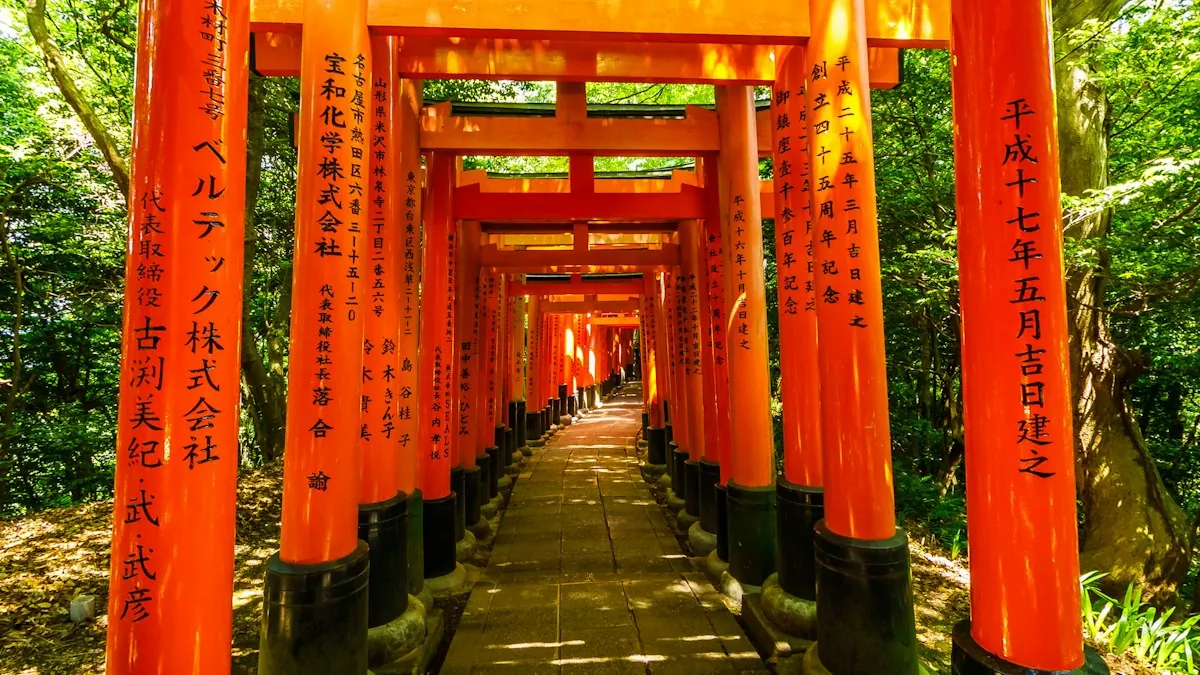
Kyoto is where old Japan survives as daily life. Fushimi Inari’s tunnels of vermilion torii gates, Kinkaku-ji’s Golden Pavilion, the rock garden of Ryōan-ji, Arashiyama’s bamboo grove, and Gion’s preserved geisha districts — these are the images most people carry of Japan, and they are all here. Tea ceremony, kaiseki dining, and craft workshops are woven into the city, and the eastern hills link major temples in one great urban walk along the Philosopher’s Path.
Kyoto’s day trips
Kyoto anchors the Kansai region: Nara’s deer park and Great Buddha (under an hour), Osaka’s street-food scene (about 30 minutes), and Uji — the heart of Japan’s matcha culture — are all easy half- or full-day trips.
Kyoto’s downsides — and an honest word about crowds
Kyoto’s biggest downside is its fame: at peak cherry-blossom and autumn-foliage times, headline sights like Kiyomizu-dera and Arashiyama get extremely crowded by midday. The trick is timing — start early (major temples open around 6am) and visit headline spots at opening or in the evening. Nightlife is quiet, and central accommodation books out early in peak seasons.
Tokyo or Kyoto for first-time visitors?
If this is your first time in Japan and you can only visit one city, let your travel style decide. Tokyo is the strongest single-city choice for most first-timers: the widest range of experiences — old and new, casual and refined, temples and neon — and the easiest city for non-Japanese speakers to navigate, with abundant English signage. Kyoto is the better pick if traditional Japan is specifically why you’re going — if temples, gardens, and tea houses are the dream, don’t dilute it.
With seven or more days, the standard advice holds: visit both. Many travelers begin in Tokyo for the energy and finish in Kyoto for a calmer, more reflective end to the trip.
How many days in Tokyo and Kyoto: the right split
The how many days in Tokyo and Kyoto question matters more than “which is better,” because the real risk is rushing. A workable rule of thumb:
- 5 days: pick one city and go deep. Tokyo has more variety for a short trip; Kyoto offers a calmer, more focused experience.
- 7 days: 4 days Tokyo / 3 days Kyoto — the classic first-timer split. Fast-paced but realistic.
- 10 days: 4 Tokyo / 3 Kyoto / 3 for day trips or a third stop like Hakone (ryokan + onsen) or Hiroshima and Miyajima.
- 14 days: keep the same split and slow down — add Osaka as a Kansai base, a temple stay, or the Japanese Alps — rather than adding cities for their own sake.
Making the two-city trip work
The Shinkansen bullet train connects Tokyo and Kyoto in a little over two hours, and trains run constantly. Practical tips: fly into one city and out of the other (open-jaw tickets) to avoid backtracking; use luggage forwarding between hotels so you ride the bullet train with just a daypack. For seasonal timing — cherry blossoms, foliage, typhoon season — see our guide to the best time to visit Japan.
Tokyo vs Kyoto food: which city eats better?
Tokyo vs Kyoto food is a contest of range versus refinement. Tokyo is one of the world’s great food cities by sheer density and variety: sushi at every level, ramen shops down every alley, izakayas, department-store food halls, international cuisine, and late-night eats. You can eat brilliantly in Tokyo on almost any budget.
Kyoto plays a different game: refinement. Kaiseki — the multi-course seasonal tasting menu born from tea ceremony — reaches its peak here, alongside shojin (temple vegetarian cuisine), delicate tofu and yuba dishes, and serious matcha culture (Uji, just south of the city, is Japan’s matcha heartland). Kyoto won’t match Tokyo’s range, but what it does, it does at the highest level. Food-first travelers on longer trips often add nearby Osaka for street food and casual eating.
Is Kyoto cheaper than Tokyo? An honest cost comparison
Roughly, costs are comparable — but the money goes to different things. Tokyo accommodation tends to run higher in convenient neighborhoods, though the city compensates with astonishingly cheap food and many free experiences (parks, shrines, skyline viewpoints). Kyoto’s temple entry fees are small and the compact center keeps transport costs low — but accommodation surges during cherry-blossom and autumn-foliage weeks.
Bottom line: the biggest cost lever isn’t which city you choose — it’s when you go and where you sleep. For peak-season trips, book accommodation early, and check the weather for your dates to understand what season you’re buying into.
Tokyo vs Kyoto in cherry blossom and autumn seasons
Seasons change the calculus. Kyoto wears spring and autumn better than anywhere — blossom-framed temples along the Philosopher’s Path and maple-covered hillsides are iconic for a reason. But those weeks are also Kyoto’s most crowded and most expensive. Tokyo’s blossoms are excellent with more breathing room: Ueno Park, Shinjuku Gyoen, and the Chidorigafuchi moat offer superb viewing, and the city absorbs crowds far better.
If seasonal scenery is the main reason for your trip, weight your days toward Kyoto — but book early and rise early. If you’d rather enjoy the season without the crush, Tokyo gives you most of the beauty with less of the stress.
Tokyo vs Kyoto FAQ
Can I see both cities in 3 days?
Technically yes, enjoyably no. With only three days, pick one city and go deep — you’ll have a far better trip than a two-city sprint.
Which city is more foreigner-friendly?
Tokyo — more English signage, more international dining, and more navigational hand-holding once you learn the rail system. Kyoto is perfectly manageable and very welcoming, just slightly less guided.
Should I stay in a ryokan?
If the budget allows, one night in a traditional ryokan (Japanese inn) — kaiseki dinner, tatami room, onsen bath — is a trip highlight. Kyoto and nearby Arima Onsen have excellent options; book well ahead, especially in peak seasons.
Which city is better for repeat visitors?
Both reward return trips differently. Tokyo rewards going neighborhood-deep (Shimokitazawa, Yanaka, Koenji, Kichijoji) on a second visit. Kyoto rewards venturing beyond the center — Kurama’s mountain temples, Ohara’s rural temples, the sake breweries of Fushimi.
The verdict: don’t choose — sequence
Tokyo vs Kyoto isn’t really a contest — search it as tokyo vs kyoto or kyoto vs tokyo and the conclusion is the same. Tokyo shows you what Japan has become; Kyoto shows you what Japan was. If time forces a choice, let your travel style decide: Tokyo for energy, food, and nightlife; Kyoto for temples, tradition, and calm.
Start planning with our deep dives: the Tokyo travel guide and Kyoto travel guide, plus the Japan country guide for visas and rail passes. For official travel information, see the Japan National Tourism Organization’s official travel site — and when you’re ready to split your days, our travel planner can help you build the route.