Every travel guide to Pakistan’s north eventually arrives at the same place: Hunza Valley, a terraced ribbon of apricot orchards and stone villages tucked beneath some of the highest peaks on earth. This Hunza Valley travel guide is built for first-time visitors — what the valley is really like, the best time to visit Hunza Valley, how to get there from Islamabad, and the things to do that actually justify the long journey. Conditions on the road change with the seasons, so treat the logistics below as a starting framework and confirm details locally before you travel.
Rakaposhi, Ultar Sar, and the serrated Passu Cones rise straight above the valley floor; the Karakoram Highway threads through it all; and the local people are famously welcoming. Hunza is often called Pakistan’s Shangri-La. For once, the cliché earns its keep. Start with our Hunza city guide for the practical basics, then use this guide to plan the trip itself.
Where Is Hunza Valley?
Hunza sits in Gilgit-Baltistan in northern Pakistan, strung along the Karakoram Highway (KKH) north of Gilgit. The valley is usually described in three bands:
- Lower Hunza — around Aliabad, the gateway town.
- Central Hunza — Karimabad, the walkable old capital with Baltit and Altit forts, and the valley’s natural base.
- Upper Hunza (Gojal) — Gulmit, Passu, and Sost, climbing toward the Khunjerab Pass and the Chinese border.
The KKH is one of the great road journeys of the world — “the Eighth Wonder of the World” in local shorthand — and reaching Hunza is half the experience. Before you go, check our live weather forecast for the valley; mountain weather shifts fast and shapes everything from road access to what you’ll pack.
Best Time to Visit Hunza Valley
The best time to visit Hunza Valley depends on what you want to see, because the valley reinvents itself every season.
- Spring (April–May): Cherry blossom season in Hunza. Apricot, cherry, and almond trees bloom in waves from lower to upper valley — roughly mid-March through April, varying by altitude and the year’s weather. White and pink orchards against snow-capped Karakoram peaks: this is Hunza’s signature spectacle, and it’s noticeably quieter than summer.
- Summer (June–September): Peak season. Warm valley days, all roads and high passes open, every activity running. July and August are the busiest — and the most social.
- Autumn (September–November): The golden season. Poplar and apricot trees turn gold and red, skies are crisp, and crowds thin out. Nights get cold, but photographers rate autumn a near-equal to blossom season.
- Winter (December–March): Heavy snow, sub-zero nights, some guesthouses closed. Only for the hardy — but the valley empties completely, and the stark winter beauty is unforgettable.
First visit? Aim for blossom season (late March–April) or autumn (October). You’ll catch Hunza at its most beautiful with a fraction of summer’s crowds. Spring also keeps accommodation costs lower — though that’s relative, so plan your budget with our Hunza trip planner rather than guessing.
How to Reach Hunza Valley from Islamabad
There are two realistic ways to reach Hunza, and the choice shapes your whole itinerary.
By road: the Karakoram Highway
The classic approach is the KKH from Islamabad — a long, spectacular mountain drive that most travelers split over two days with an overnight stop (Chilas or Naran are common halts). The journey passes Abbottabad, Mansehra, Besham, Chilas, and Gilgit before the final stretch to Hunza. Road conditions vary by season and by ongoing construction, so check locally before setting off, avoid night driving in the mountains, and build buffer time into your schedule.
By air: fly to Gilgit
The faster option is a short domestic flight from Islamabad to Gilgit, followed by a scenic drive of a couple of hours up the KKH to Hunza. Flights are spectacular — the aircraft threads between the peaks — but they are genuinely weather-dependent and get cancelled in bad conditions. Never plan a tight onward connection on a flight-to-Gilgit day.
Getting around: Most visitors hire local drivers or join day trips arranged through their guesthouse. The main sights are spread along the KKH corridor, so private transport is by far the most practical option.
Things to Do in Hunza Valley
The essential things to do in Hunza Valley split naturally between Central Hunza and Upper Hunza. Plan at least three to four days; five to seven lets you slow down.
Karimabad, Baltit Fort and Altit Fort
Karimabad is the natural base: stone lanes, handicraft shops, and cafés with terrace views of Rakaposhi. Above the town stands Baltit Fort, a centuries-old Tibetan-influenced fort restored by the Aga Khan Trust for Culture — the guided tour walks you through Hunza’s history as a princely state. Below town, the even older Altit Fort and its royal garden are worth the walk down. Don’t skip the Eagle’s Nest viewpoint above Duikar for the valley’s classic sunrise or sunset panorama.
Attabad Lake
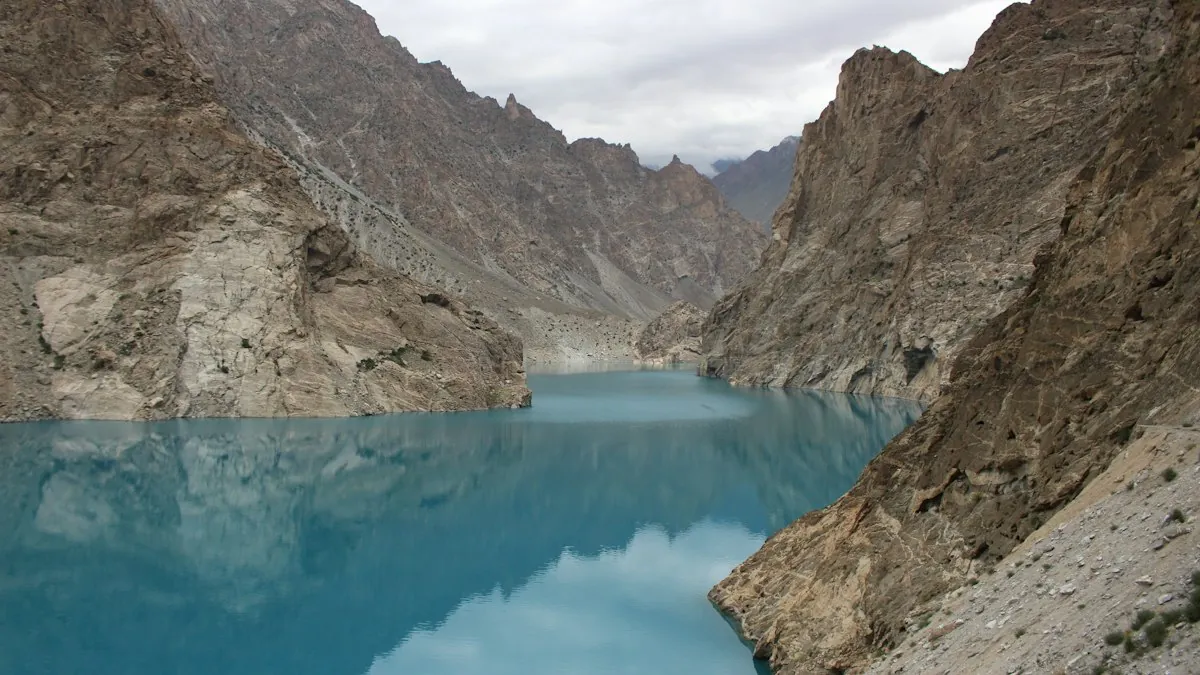
Born from a massive landslide in 2010 that dammed the Hunza River, Attabad Lake is now the valley’s signature sight — a long ribbon of turquoise water threaded by the rebuilt KKH tunnels. Boating and lakeside tea are the staples; go early morning for the stillest water and deepest color.
Passu, the Passu Cones and the Hussaini Bridge
In Upper Hunza, the Passu Cones — a phalanx of pointed cathedral-like peaks — are one of the most photographed mountain scenes in Pakistan. Nearby, the Hussaini Suspension Bridge sways over the Hunza River; crossing it is equal parts thrill and rite of passage. The glaciers above Passu and the white-water of the river make this the adventure heart of the valley.
Khunjerab Pass
The KKH climbs to Khunjerab Pass on the Chinese border — the highest paved international border crossing in the world, at over 4,600 meters. It’s a full-day excursion from central Hunza, usually combined with Passu. Altitude hits everyone differently; go slow, and check whether the pass is open in your season before counting on it.
Village walks and local food
Hunza rewards slow days: walks through terraced fields and apricot orchards, walnut cake and apricot juice in Karimabad’s cafés, and the valley’s distinctive cuisine — chapshuro (meat pie) is the local signature. Hunza pairs beautifully with the rest of northern Pakistan’s hidden gems if you’re touring the region.
Where to Stay in Hunza
Accommodation ranges from family-run guesthouses and boutique stays in Karimabad to riverside hotels along the KKH and luxury lodges in the upper valley. Karimabad is the best all-round base; Passu suits travelers focused on Upper Hunza. In blossom season and the July–August peak, book well ahead — the best-reviewed places fill fast. We keep things qualitative here on purpose: names, prices, and availability shift constantly, so browse current options on our hotels page for your dates rather than trusting a static list.
Hunza Valley Travel Tips
- Carry cash. ATMs are limited in the valley and card acceptance is patchy; carry enough Pakistani rupees for your whole stay.
- Layer up. Mountain weather changes hourly. Even in summer, evenings are cool and the Khunjerab day trip is properly cold — check the weather forecast before you pack.
- Respect local culture. Hunza is socially relaxed by regional standards, but dress modestly and ask before photographing people.
- Stay connected loosely. Mobile data exists but can be slow; SCOM has the best local coverage. Download offline maps.
- Allow buffer days. Flights to Gilgit get cancelled, landslides close road sections in monsoon, and the valley deserves unhurried time anyway.
Hunza also combines naturally with the rest of a Pakistan trip — see our Pakistan country guide for itineraries that link the valley with Lahore, Islamabad, and Skardu.
FAQ: Hunza Valley
Is Hunza Valley safe for tourists?
Hunza is widely considered one of the safest and most welcoming regions in Pakistan for visitors, domestic and international alike. Normal mountain-travel precautions apply: travel with a local driver, keep someone informed of your plans, and watch the weather.
How many days do I need in Hunza Valley?
Three to four days covers the highlights — Karimabad and the forts, Attabad Lake, Passu, and a Khunjerab day trip. Five to seven days lets you add village walks, the Hussaini Bridge, and a slower pace. Most travelers wish they’d stayed longer.
What is the best time to visit Hunza Valley?
April to October overall. Late March to April for the cherry blossom season, June to August for full access and activities, October for golden autumn color.