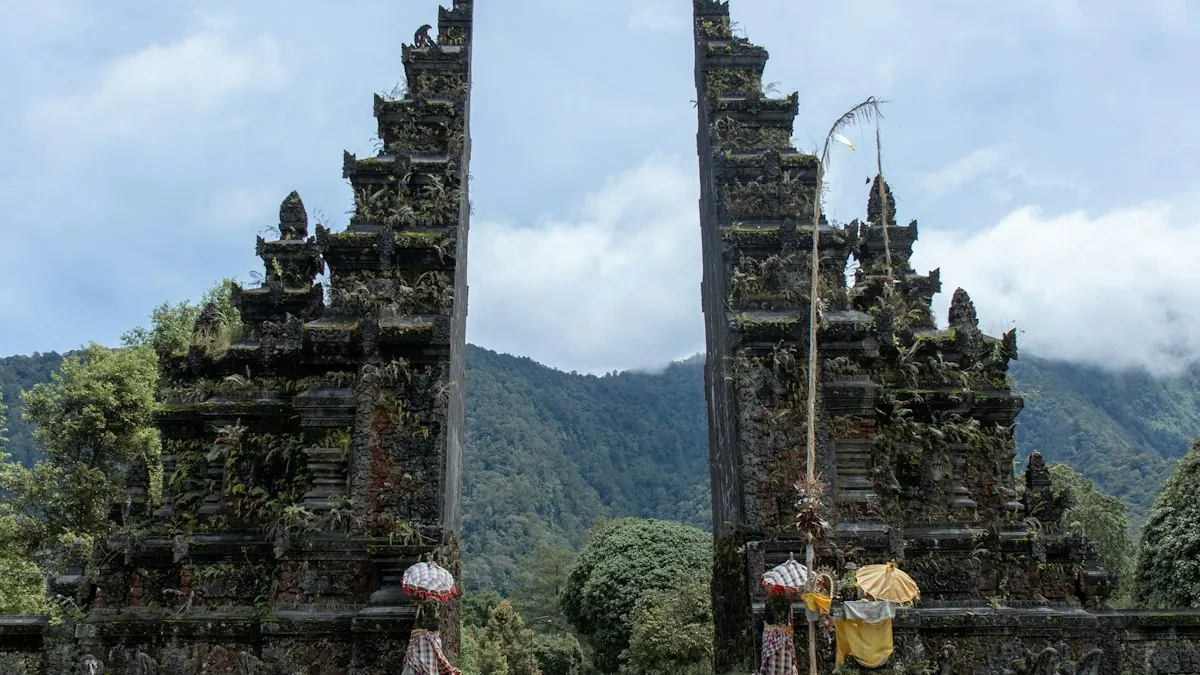
This Bali travel guide is built for first-timers. Bali is not one destination but several folded into one small island: a spiritual highland town wrapped in jungle, surf beaches strung along the south coast, cliff temples at sunset, rice terraces that look Photoshopped in real life, and offshore islands with some of the best snorkeling in Southeast Asia. Get the geography wrong and you will spend your trip in traffic; get it right and a week in Bali feels effortless. Here is how to choose where to stay, what to actually do, and how to string it all into a 7-day Bali itinerary that flows.
Where to stay in Bali: the best areas, decoded
Bali has no single center, so the most important planning decision is your base. Pick the area that matches what you want to do each day, and use day trips for the rest. These are the main choices for a first trip.
Ubud — culture, temples and jungle calm
Inland Bali’s cultural heart: the Sacred Monkey Forest, Tegalalang rice terraces, dozens of temples, yoga studios, and the Ubud Art Market. It is busy now, but the real calm sits in the villages around it — Penestanan and Nyuh Kuning still feel like old Bali. Best for culture, wellness, waterfalls, and early mornings. Base yourself here for the first 3 nights of a Bali itinerary.
Canggu — surf, cafés and the social scene
Bali’s trendiest stretch of black-sand surf beaches (Batu Bolong, Echo Beach), smoothie bowls, coworking spaces, and a packed nightlife calendar. It draws younger travelers and remote workers. The honest warning: traffic here is genuinely bad — stay central to where you’ll actually spend your days, or accept the scooter.
Seminyak — polished beach life for first-timers
Boutique shopping along Eat Street, beach clubs, fine dining, and easy sunset bars. More polished and comfortable than Canggu, and close to the airport — a smart first-night landing spot. Best for couples and anyone who wants the beach with amenities.
Uluwatu — cliffs, surf and sunsets
The Bukit Peninsula’s limestone cliffs hold world-class surf breaks, hidden beaches reached by cliff stairs, and Uluwatu Temple perched 70 meters above the ocean with its nightly kecak fire dance at sunset. Best for surfers, sunset chasers, and dramatic coastline. Finish your trip here — it is the kind of ending that makes people plan a return.
Sanur and Nusa Dua — slow, calm, family-friendly
Sanur has a walkable beachfront promenade, calm water, and the harbor for boats to Nusa Penida. Nusa Dua is a gated resort zone with quiet beaches. Both suit families, slow trips, and anyone arriving on a long flight who wants an easy first 48 hours.
Nusa Islands — the day trip (or the escape)
Nusa Penida’s Kelingking Beach — the T-rex cliff above impossibly blue water — is one of the most photographed views in Asia, and manta-ray snorkeling at Manta Bay is a genuine bucket-list swim. A guided Nusa Penida day trip from Sanur covers the west coast highlights in a day. Nusa Lembongan, its smaller neighbor, is calmer and easier to do slowly.
Things to do in Bali: temples, terraces and the coast
Bali’s best experiences fall into three clusters. Do one cluster per day, and you will never feel rushed.
Bali temples worth your time
Balinese Hinduism shapes daily life on the island, and its temples — pura — are the deepest cultural layer you can visit. Start with these: Uluwatu Temple at sunset for the cliff views and kecak dance, Tanah Lot for the iconic sea-temple silhouette (go late afternoon for sunset, and arrive early for a viewing spot), Tirta Empul near Ubud where you can join the melukat purification ritual in the holy springs, and Ulun Danu Beratan, the floating lake temple in the highlands that appears on Indonesian banknotes. Temple etiquette matters: dress modestly, and wear the sarong and sash provided at entrances. These are working places of worship, not museums.
Rice terraces, waterfalls and volcanoes
Tegalalang’s terraces are beautiful at sunrise before the crowds arrive; for a quieter, UNESCO-listed version, Jatiluwih in west Bali rewards the longer drive. The Campuhan Ridge Walk at dawn is Ubud’s best free morning. Waterfall chasing is a full Bali genre — Tegenungan and Tibumana are the easy starters near Ubud. For the adventurous, the Mount Batur sunrise hike (a 2 a.m. start, volcano crater at dawn) is the island’s signature adventure; book it as a guided tour with transport included.
Beaches and surf
The south coast is Bali’s playground. Learning to surf on the gentle beach breaks of Canggu or Kuta is one of the island’s great rites of passage — lessons and board rentals are everywhere. For scenery rather than surf, the hidden coves of Uluwatu (Padang Padang, Suluban, Green Bowl) deliver the dramatic cliff-and-cove look. End at least one day with a sunset seafood dinner on the sand at Jimbaran Bay.
Bali itinerary: 7 days for first-timers
Seven days is the sweet spot for a first trip — enough for two or three bases without constant packing. The standard winning split is 3 nights in Ubud and 4 on the coast. Here is a Bali itinerary 7 days plan that flows geographically, with no backtracking:
Days 1–2: Land and settle. Airport transfer to Seminyak or Sanur. Day one is for the beach, a sunset, and an early night. Day two: explore the coast — Tanah Lot at sunset pairs perfectly with a morning at the beach.
Days 3–5: Ubud. Move inland. One day for temples (Tirta Empul, Gunung Kawi, Goa Gajah), one for rice terraces and waterfalls (Tegalalang at sunrise, Tegenungan, Campuhan Ridge), and one slow day — cooking class, spa, art market. Add the Mount Batur sunrise hike on the last Ubud morning if you have the energy.
Day 6: Nusa Penida day trip. Fast boat from Sanur, guided west-coast tour (Kelingking, Angel’s Billabong, manta snorkeling), back by late afternoon.
Day 7: Uluwatu finale. Hidden beaches in the morning, Uluwatu Temple and the kecak fire dance at sunset, seafood dinner at Jimbaran. Fly home, or extend. Want to adapt this to your dates? Drop it into our trip planner and build it day by day.
Best time to visit Bali
Bali is a year-round destination, but its two seasons shape the trip. The dry season (April–October) brings the most reliable sunshine — July and August are the peak: liveliest atmosphere, highest prices, busiest beaches. The wet season (November–March) means heavy afternoon bursts rather than all-day drizzle, plus lusher landscapes, lower prices, and fewer crowds. The sweet spots most returning travelers target are April–June and September: good weather without the peak-season squeeze. Check the current Bali weather before you lock in dates, especially in the shoulder months.
One timing note unique to Bali: Nyepi, the Balinese Day of Silence (usually in March), shuts the entire island down for 24 hours — including the airport. It is a fascinating experience if you plan for it, and a stranded-at-the-hotel day if you don’t. Verify the date before booking if your trip falls in March.
Getting around and staying safe
Bali rewards slow travel, but the island’s roads do not. Plan by travel time, not distance — a 20-kilometer hop can take 90 minutes in south Bali traffic. For first-timers, the safest and most relaxing setup is a private car with a driver for full sightseeing days, plus ride-hailing apps (Grab, Gojek) for short hops. Rent a scooter only if you already ride confidently at home and hold a valid international driving permit with insurance that covers scooters; accidents are the single most common travel mishap on the island, far ahead of crime.
Money talk: Bali rewards slow travel on a modest budget — guesthouses and warungs in Ubud and east Bali are easy on the wallet, while Seminyak, Canggu, and Uluwatu’s beach clubs price like any global resort town. You can compare options before you commit on our Bali hotels page and check the Bali map to see how the regions actually connect.
Before you book: visas, the tourism levy, and official sources
Most nationalities can get a visa on arrival, and Bali now has a separate tourism levy payable through the official Love Bali platform — both rules change, so confirm the current requirements before you fly. For authoritative, up-to-date information, check Indonesia Travel, the official tourism site, and this plain-English rundown of the official pre-travel websites (visa, arrival card, and levy) that every visitor should know about.