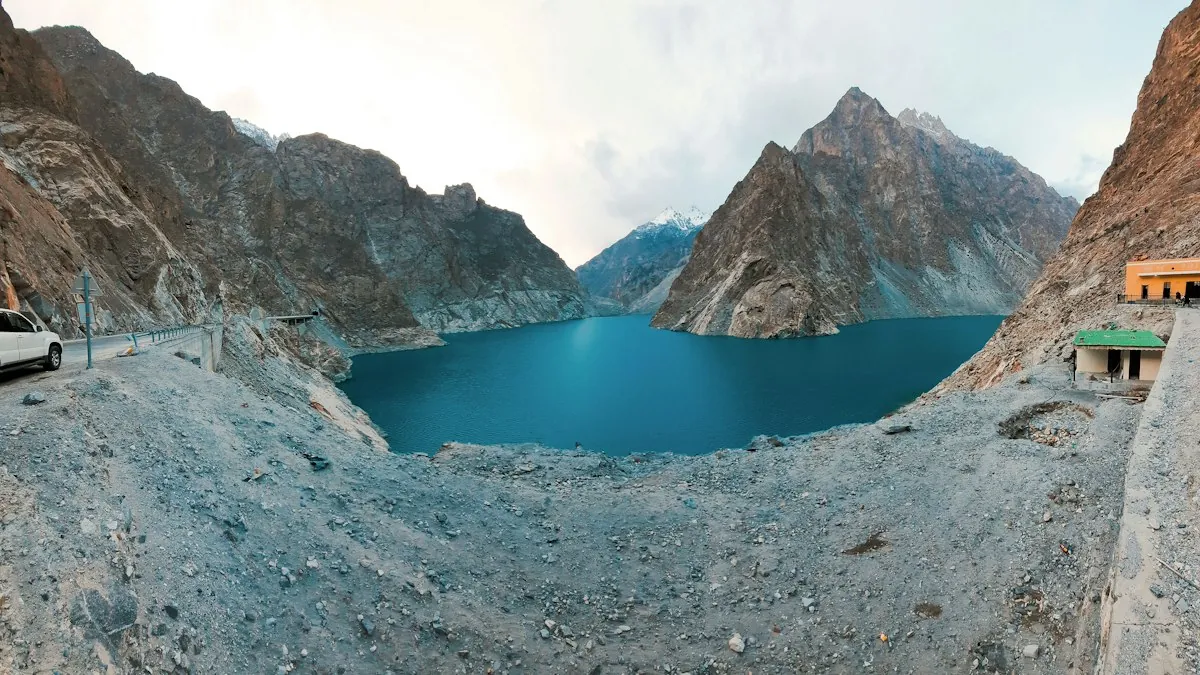
Most travelers who visit Pakistan see the same highlights: Lahore’s Mughal monuments, the Karakoram Highway, Hunza’s postcard valleys, and Fairy Meadows. They are all wonderful — but some of the country’s most rewarding places sit quietly off that main trail. These hidden gems of Pakistan are the valleys you reach only by jeep track, the desert forts with no crowds at the gate, and the beaches and shrines that rarely make it into itineraries.
This guide collects fifteen of them, with honest notes on access and timing. If you’ve already seen the big names and want to go one valley further, start here.
Why Pakistan’s hidden gems are worth the detour
Pakistan’s tourism is growing fast, and the famous northern circuit can feel busy in peak season. The country’s offbeat places, by contrast, still deliver what travelers come here for: empty alpine lakes, living heritage, and landscapes that feel untouched. Getting to them takes more planning, but that effort is exactly what keeps them quiet.
Hidden gems in northern Pakistan
The north holds the richest concentration of unexplored places in Pakistan. Beyond Hunza and Skardu, entire valleys see only a fraction of the visitors they deserve.
1. Phander Valley
Often called the most beautiful valley you’ve never heard of, Phander sits on the Gilgit–Shandur road between Gilgit and Chitral. Phander Lake is small but striking — deep blue water fringed by meadows and poplar trees, with the Hindukush rising behind it. Expect simple guesthouses and trout fishing rather than tour buses; the road is rough in places, so a 4×4 is recommended. It also makes a natural stop if you’re continuing over Shandur Pass toward Chitral — or heading the other way to our Hunza Valley guide.
2. Khaplu Valley
The 19th-century Khaplu Palace, once the Raja’s residence, is now a heritage hotel and museum — day visitors can wander its carved wooden balconies. Around it lie apricot orchards, the 14th-century Chaqchan Mosque, and views of Masherbrum on clear days. Khaplu is greener and calmer than Skardu — ideal for slow travel.
3. Deosai National Park
Deosai’s high plateau is a rolling summer plain of wildflowers and home to the Himalayan brown bear. Sheosar Lake, at the western edge, is one of the highest lakes on earth. The park is generally accessible only from roughly June to September — outside that window the jeep tracks are snowed under. Access is by 4×4 from Skardu or Astore, with no fuel or food on the plateau — carry everything and build in a buffer day.
4. Kalash Valleys, Chitral
The three Kalash valleys — Bumburet, Rumbur, and Birir — are home to the Kalash people, with their own language, festivals, and traditions. The spring Chilam Joshi and winter Chaumos festivals draw the most visitors, but off-season visits give a calmer look at village life and the walnut groves. Stay in a family-run guesthouse, hire a local guide, and always ask before photographing people.
5. Shandur Pass
At around 3,700 meters, Shandur holds what’s billed as the highest polo ground in the world. Each July, teams from Chitral and Gilgit contest the Shandur Polo Festival — a week of hard-riding matches, folk music, and high-altitude camping. Check road conditions before attempting the crossing.
6. Rama Meadows and Rama Lake, Astore
Astore district is full of valleys that get a fraction of Hunza’s visitors. Rama Meadows, reached by jeep from Astore town, opens onto thick pine forest with Nanga Parbat’s Rupal face looming at the head of the valley; Rama Lake is a short walk from the meadows. Basic huts and camping are available through the summer.
7. Fairy Meadows — and the walk beyond
Fairy Meadows itself is no longer exactly hidden, but most visitors stop at the meadow viewpoint. The real reward is the onward trek: the trail continues to Beyal Camp and then to the Nanga Parbat base camp viewpoint — one of the great mountain panoramas in the Himalaya. It’s a moderate trek of a few hours from the meadows, and staying a night at Beyal puts you above the day-trip crowds. For route context, National Geographic’s guide to hiking in Pakistan covers the country’s major treks in detail.
8. Minimarg and Domel, Astore
Near the Line of Control, Minimarg was long restricted and only opened more broadly to visitors in recent years — which is exactly why it still feels untouched. Alpine meadows, trout streams, and the small village of Domel make this one of the prettiest corners of Astore. Access requires permits and the road typically opens only in summer, so check current requirements with a local operator before planning.
Offbeat heritage sites in Punjab and Sindh
Northern Pakistan gets the photos, but some of the country’s most fascinating unexplored places are heritage sites in the south — ancient, uncrowded, and easy to pair with Karachi or Lahore.
9. Ranikot Fort, Sindh
Claimed to be the largest fort in the world by circumference, Ranikot’s walls run for roughly 32 kilometers through the Kirthar hills, a few hours’ drive from Karachi. Historians debate its exact origins — parts may date to the Talpur era, with older foundations — but the scale is undeniable. Walk the ramparts, explore the inner forts of Miri and Shergarh, and camp under some of the darkest skies in the country.
10. Gorakh Hill Station, Sindh
Sindh’s only hill station sits at about 1,734 meters in the Kirthar range, northwest of Dadu. Summer nights here can turn chilly while the plains below swelter — a surreal contrast. The road up is rough and best done in a 4×4, especially after rain. Facilities are basic — a few rest houses and camping spots — so book ahead in winter when domestic visitors peak.
11. Derawar Fort, Cholistan Desert
Rising from the Cholistan desert near Bahawalpur, Derawar’s massive square walls — with forty bastions visible for miles across the flat sand — are one of Punjab’s most dramatic sights. The fort dates in its current form to the 18th century under the Abbasi rulers of Bahawalpur. Combine it with Bahawalpur’s palaces and the shrine city of Uch Sharif for a fine long weekend from Lahore.
12. Uch Sharif, Punjab
One of the oldest towns in South Asia, Uch Sharif holds some of Pakistan’s finest shrine architecture — the blue-tiled tombs of Bibi Jawindi, Baha’al-Halim, and Ustad Nuriya, dating to the 13th–15th centuries. The town sits near the confluence of the Chenab and Indus rivers, an easy detour between Multan and Bahawalpur. Visit at sunrise or sunset when the tilework glows.
13. Katas Raj Temples, Chakwal
A complex of ancient Hindu temples clustered around a sacred pond in the Salt Range, Katas Raj is said in legend to have formed from the tears of Shiva. The temples span several centuries of construction, and the site’s quiet, overgrown atmosphere makes it one of Punjab’s most evocative half-day trips from Lahore or Islamabad. The pond’s water level has fluctuated in recent years — check recent visitor reports.
Unexplored places on Pakistan’s coast and desert edge
Balochistan’s coastline and deserts are among the least-visited corners of the country — wild, stark, and utterly different from the north.
14. Hingol National Park and the Princess of Hope
Pakistan’s largest national park stretches along the Makran coast, where desert meets the Arabian Sea. The wind-carved rock formation known as the Princess of Hope and the nearby Balochistan Sphinx are natural sculptures along the coastal highway. Kund Malir beach, inside the park, has clear water and dramatic cliffs. Drive in from Karachi via the Makran Coastal Highway with a full tank and daylight to spare.
15. Astola Island, Balochistan
Pakistan’s largest offshore island, off the coast near Pasni, is uninhabited apart from a small seasonal fishing presence and a lighthouse. The surrounding waters are a marine protected area with coral patches, dolphins, and nesting green turtles. Reaching it means arranging a boat from Pasni — a full-day expedition, best done with an experienced local operator in the calmer-sea months, roughly October to March.
Planning an offbeat Pakistan itinerary
These hidden gems of Pakistan cluster into natural add-ons for standard routes:
- Northern loop: Islamabad → Naran/Babusar → Hunza → Skardu → Deosai → Astore and Rama → back via Babusar. Add Phander and Shandur if heading to Chitral and the Kalash valleys. See our complete Hunza Valley guide for that leg.
- Southern heritage: Karachi → Hingol National Park → Gorakh Hill (winter) → Ranikot Fort → Multan → Uch Sharif → Bahawalpur/Derawar. Best in the cooler months.
- Standalone expeditions: Astola Island needs its own window from Karachi/Pasni; the Fairy Meadows–Nanga Parbat base camp trek is a multi-day trek from Raikot Bridge.
Practical tips for exploring off the beaten path in Pakistan
- Season matters more than anywhere. Northern areas are generally accessible May to October; high passes like Shandur and Babusar typically open June to September. Winter visits suit the southern sites (Ranikot, Derawar, Uch Sharif).
- Roads are the adventure. Many of these places need 4×4 jeeps and long drives. Hiring a local driver who knows the route is money well spent.
- Permits and advisories. Some border areas (Minimarg, parts of Balochistan) need permits or have travel advisories. Check current guidance before you go.
- Cash and connectivity. ATMs and mobile signal thin out fast beyond main towns. Carry cash in rupees and download offline maps.
- Pack for altitude. Even summer nights above 3,000 meters are cold, so bring layers and sun protection. Check the weather before you set out.
Traveler tip: Build buffer days into any northern Pakistan itinerary. Landslides and road closures are a normal part of travel here — the travelers who enjoy it most are the ones who planned for delays instead of fighting them.
Pakistan rewards the traveler who goes one valley further. Start with the highlights on our Pakistan travel guide, then pick two or three of these offbeat places to layer into your route — and use our travel planner to turn the list into an actual itinerary.